Oak guide
Solid oak vs oak veneer stair treads
How the two are built: what is on the face, what is inside, and what that means over the life of a staircase.
4 min read · Updated
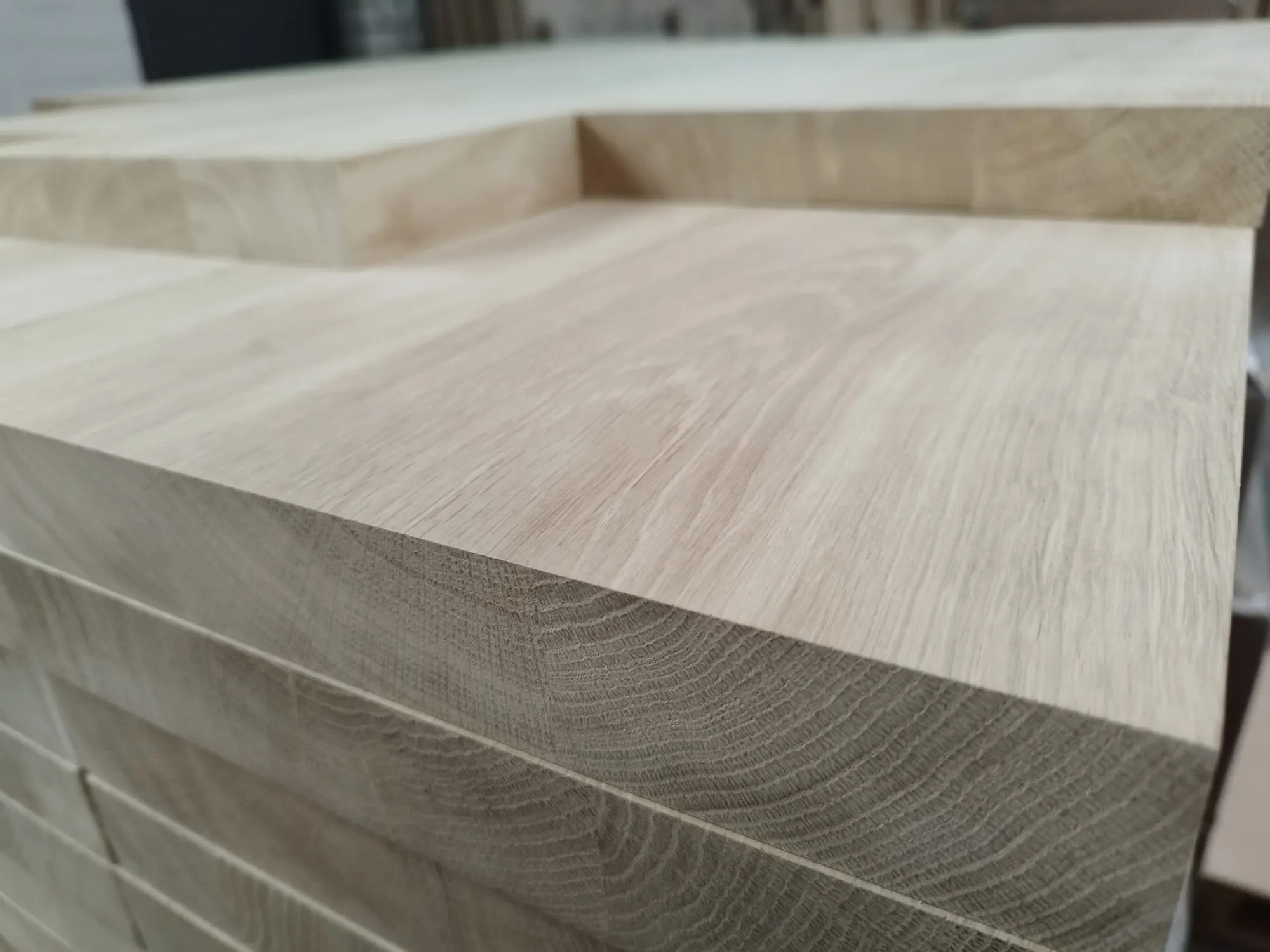
Solid oak and oak-veneered stair treads can look alike from above. The difference is what is inside, what the edges show, and what that means when a tread is cut, sanded or refinished. This is a factual comparison of how each is built.
How each is built
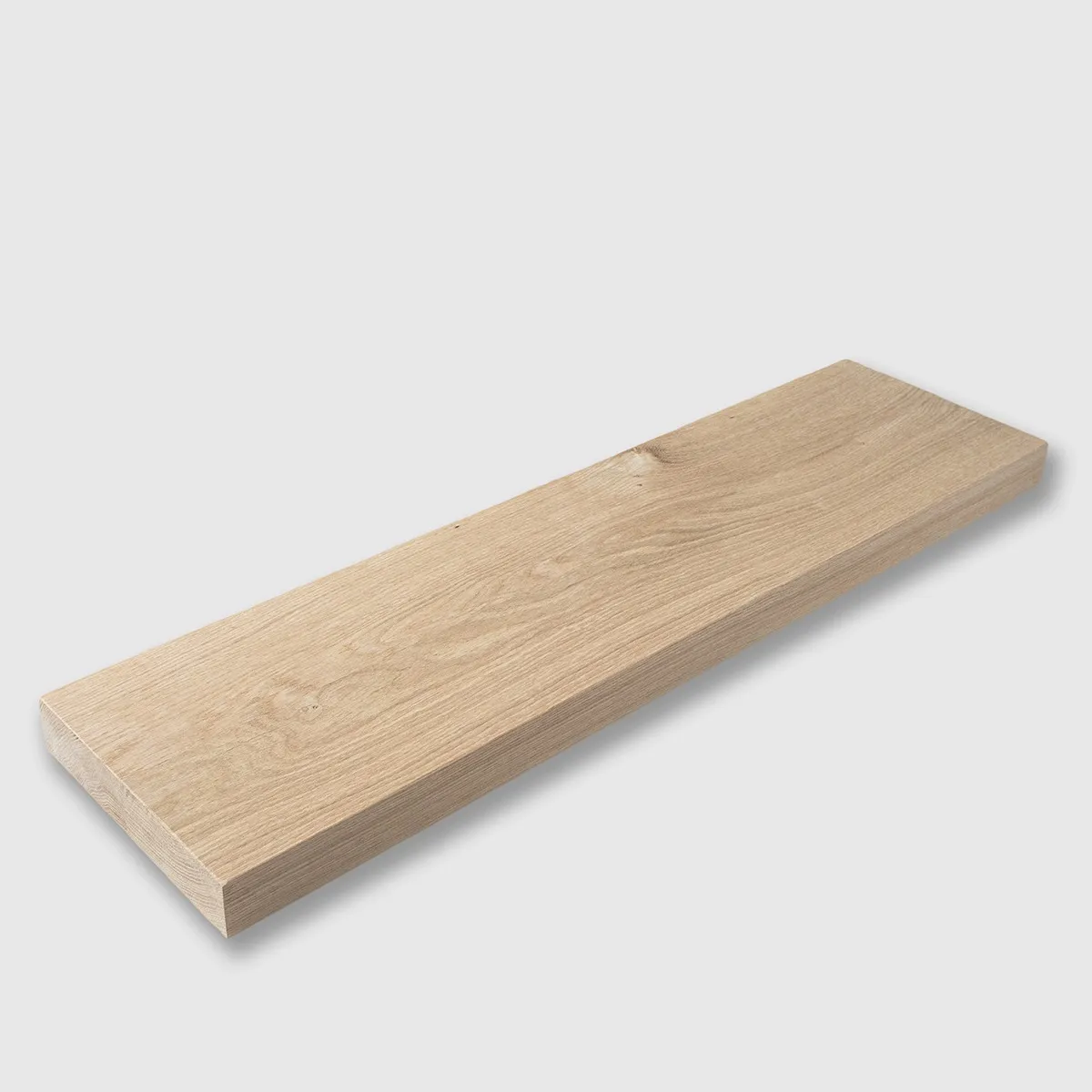
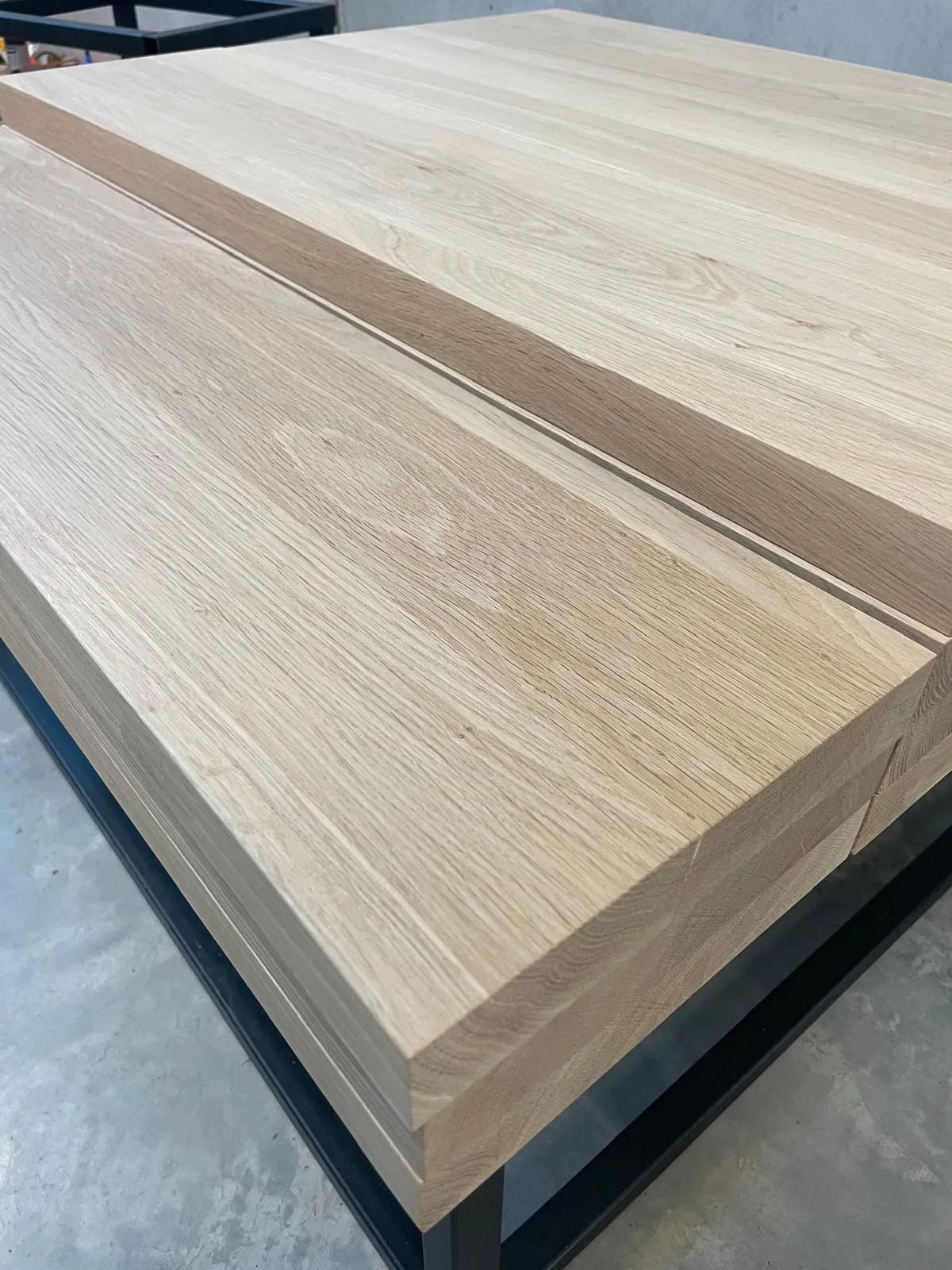
A solid oak tread is oak all the way through — in our case full-length staves glued edge to edge to 40 mm. A veneered tread has a thin layer of oak on its faces, bonded to a core of another material, typically a board such as MDF or plywood; its visible edges are often finished with an oak lipping.
Side by side
| Solid oak | Oak veneer | |
|---|---|---|
| Face | Oak | Oak |
| Inside | Oak throughout | A core material |
| Edges | Oak, with the end grain visible | Usually an oak lipping or edging |
| Cutting to size | Cut edges are oak | Cut edges show the core unless lipped again |
| Sanding and refinishing | Can be sanded back and refinished | Limited by the thickness of the veneer |
Veneered treads are a valid choice for some projects. If you want the tread to be oak wherever it is cut, sanded or seen, choose solid oak.
Our treads
- 100% solid European oak
- 40 mm solid material
- Full-length staves, glued edge to edge
- No MDF core
- No veneer
- No finger joints
Choosing
Our treads are sold in 15 standard sizes, from £32 ex VAT. We make all our material ourselves — everything we sell comes from our own factory. See every size in Oak stair tread sizes: a UK buyer’s guide, or go straight to the product.
Have a project to price?
Send us your tread sizes, riser sizes, quantities, preferred grade and delivery postcode. We price the project as one order and reply in writing.