Oak guide
40 mm stair treads or 15 mm over-treads: which do you need?
One replaces the step, the other covers it. How to choose, and what happens to the step heights.
4 min read · Updated
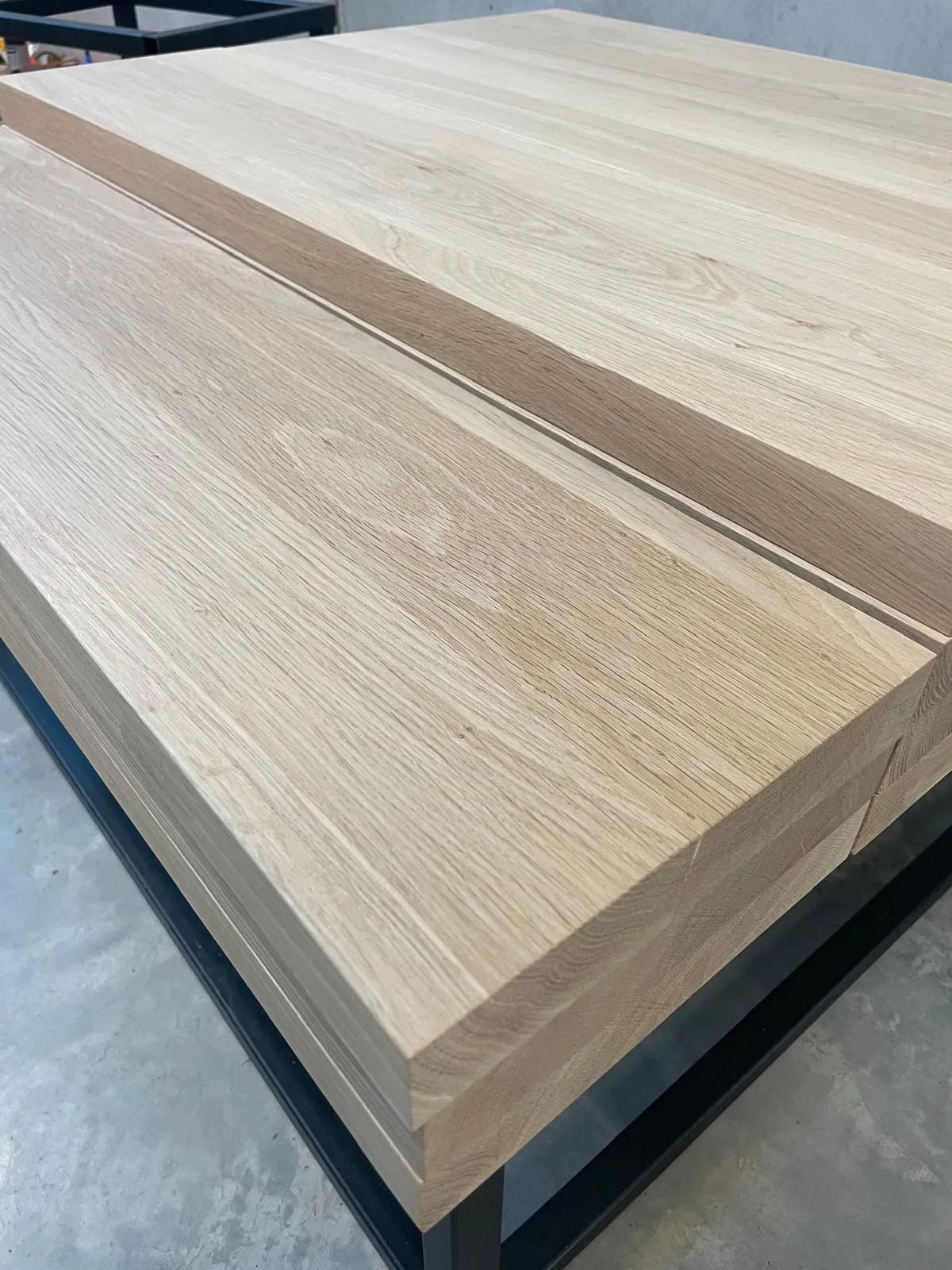
We sell solid oak for stairs in two thicknesses, and they do different jobs. A 40 mm stair tread is the step: it goes into a new staircase or replaces the old treads. A 15 mm over-tread covers the step: it is laid on an existing staircase that stays in place.
The short answer
- Building a new staircase, or taking the old treads out? Choose 40 mm stair treads, with 20 mm risers and a 40 mm landing panel to match.
- Keeping a sound staircase and changing only its look? Choose 15 mm over-treads, laid on the existing steps.
Side by side
| 40 mm stair tread | 15 mm over-tread | |
|---|---|---|
| What it is | The step itself | A solid oak layer on an existing step |
| Thickness | 40 mm | 15 mm, with a 40 mm nose |
| The old step | Removed, or a new staircase | Stays in place |
| Standard sizes | 15 sizes, 750–1400 × 220–320 mm | 5 sizes, 800–1000 mm long |
| From (B/C, ex VAT) | £32 | £29 |
| Risers | 20 mm solid oak risers, 200 mm high | The existing risers stay |
| Material | 100% solid European oak | 100% solid European oak |
40 mm stair treads
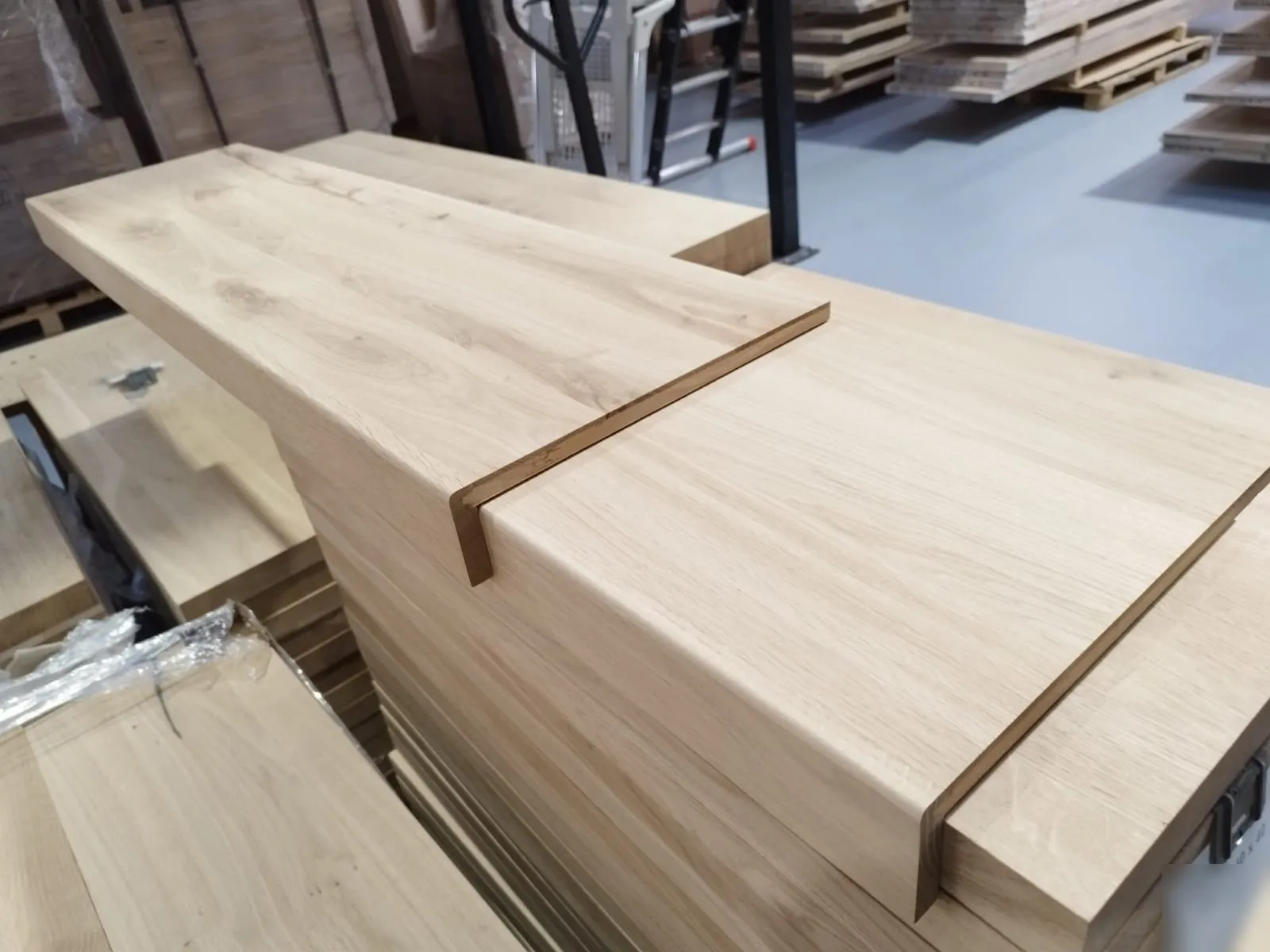
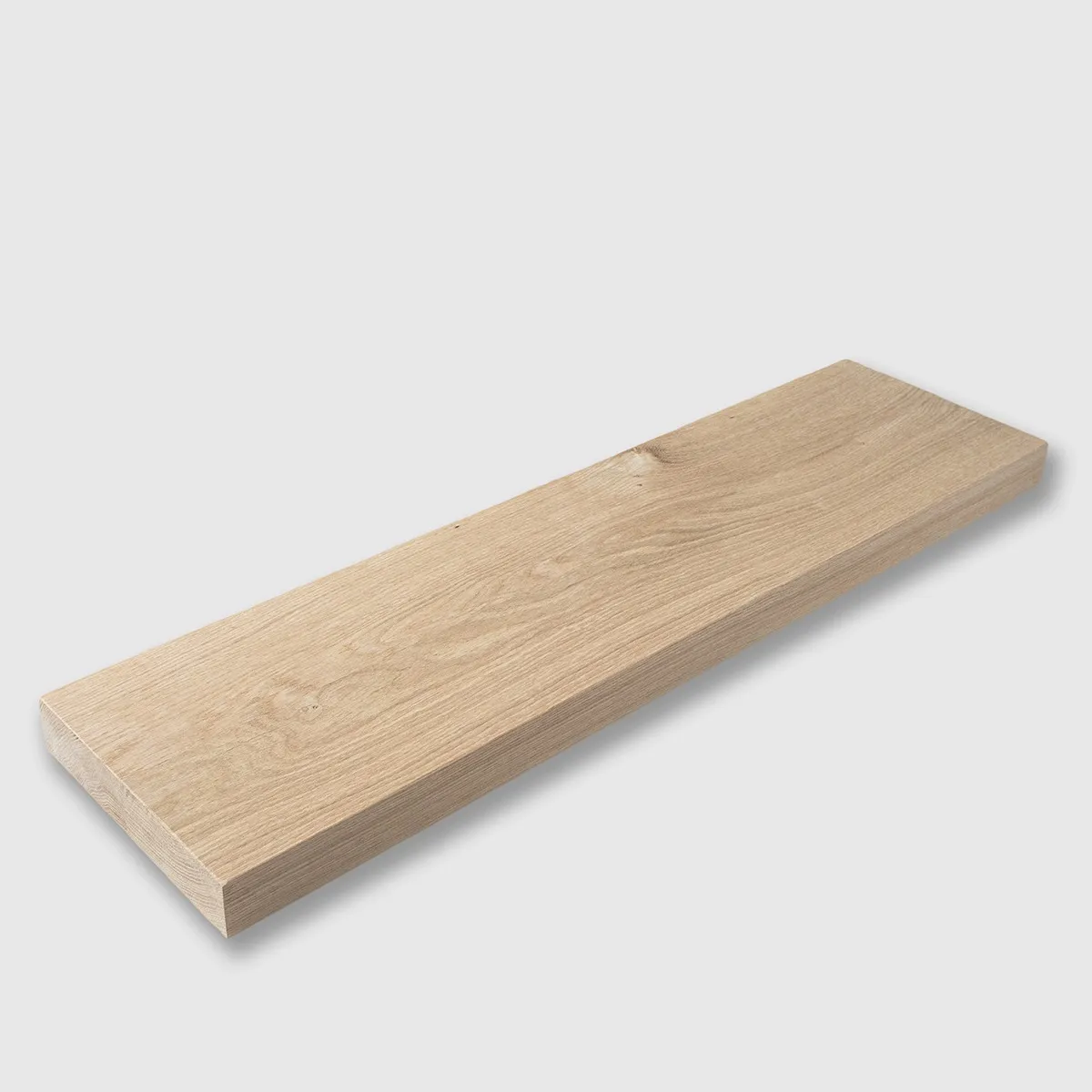
Our 40 mm treads are full-length solid oak staves glued edge to edge, with no finger joints. They are what a joiner fits when building or rebuilding a staircase, and they come with matching risers and landing panels, so the whole staircase is one oak. The structure of the staircase is your joiner’s design; the tread is the solid oak part of it.
15 mm over-treads
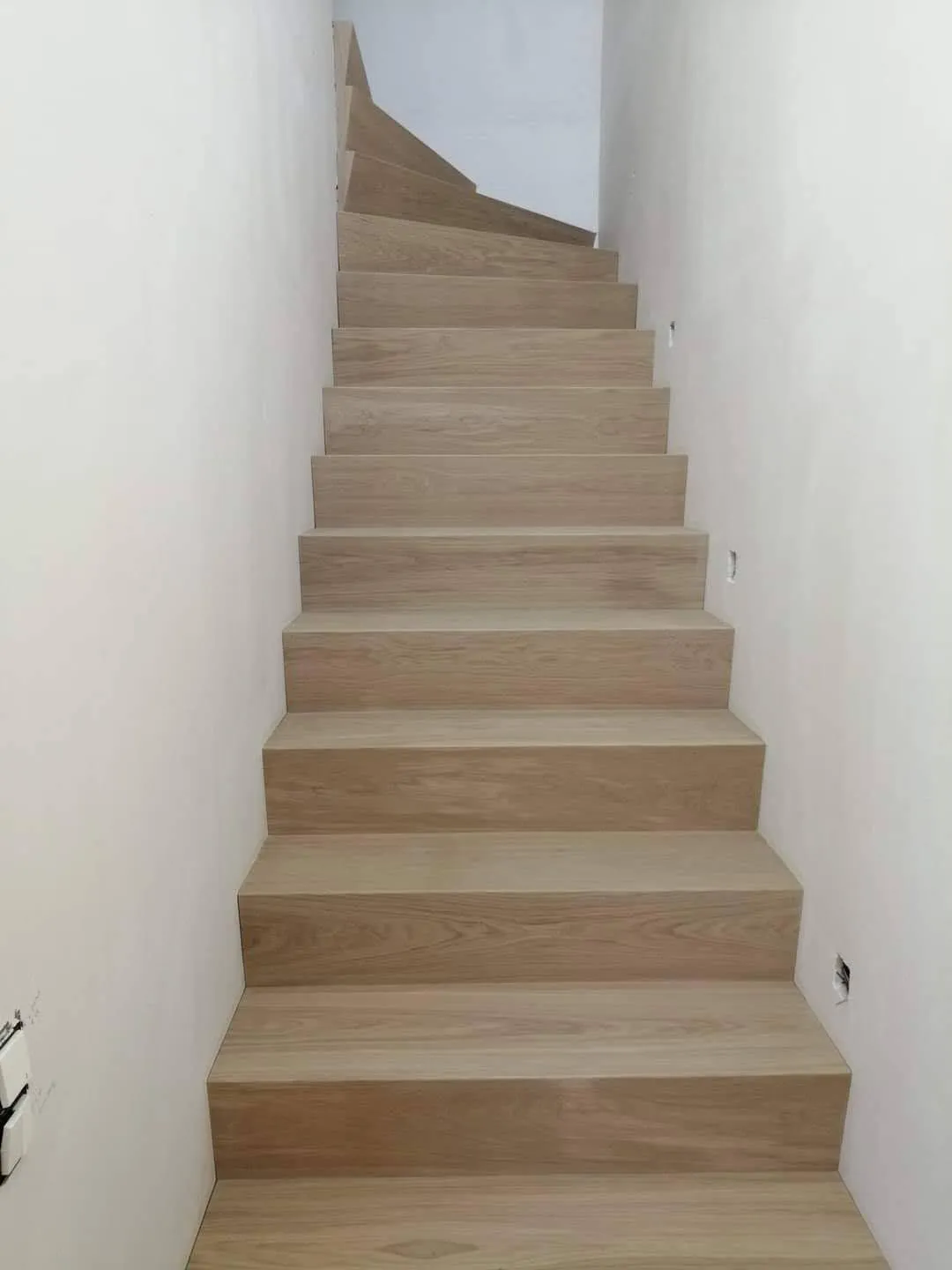
Over-treads are for renovation: they give an existing staircase a solid oak face without taking it apart. The steps underneath have to be sound, flat and firmly fixed. The full checklist, measuring and the first-and-last-step heights are in How to renovate a staircase with solid oak over-treads.
What happens to the step heights
Replacing a tread with one of the same thickness keeps every rise as it was. Laying 15 mm over-treads raises each step by 15 mm: the rises between steps stay equal, but the first rise grows by 15 mm and the last one shrinks by 15 mm unless the landing is raised too. If you replace thinner treads with 40 mm ones, the same happens by the difference in thickness. Check this before you order.
Which to choose
If you are not sure whether your staircase can be clad, send us photos and the sizes of each step. We tell you which product fits and what it costs; the decision about the structure stays with you and your fitter.
Have a project to price?
Send us your tread sizes, riser sizes, quantities, preferred grade and delivery postcode. We price the project as one order and reply in writing.