Oak guide
How to renovate a staircase with solid oak over-treads
Clad the staircase you have in solid oak: what to check first, how to measure, and the height of the first and last step.
6 min read · Updated
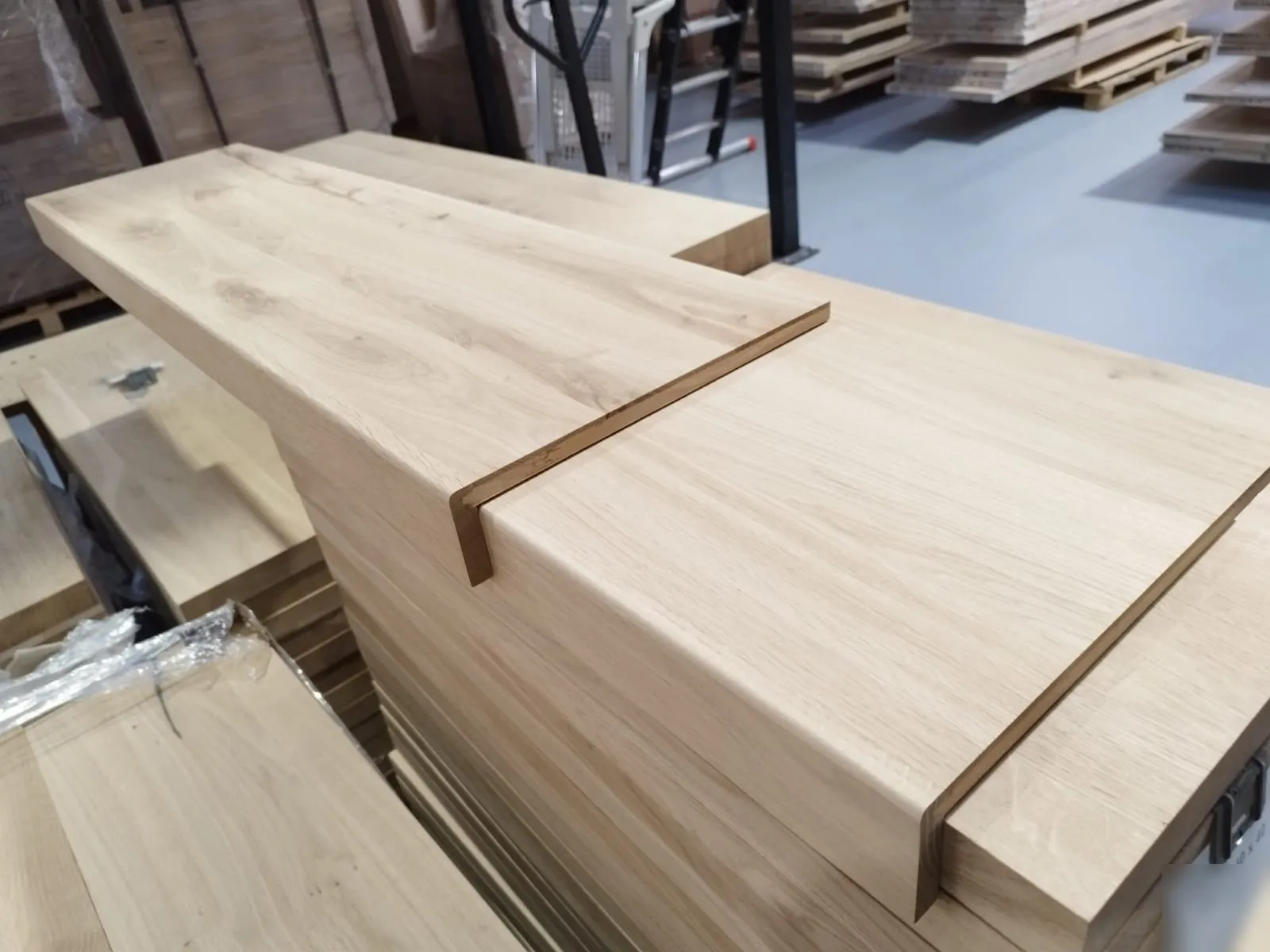
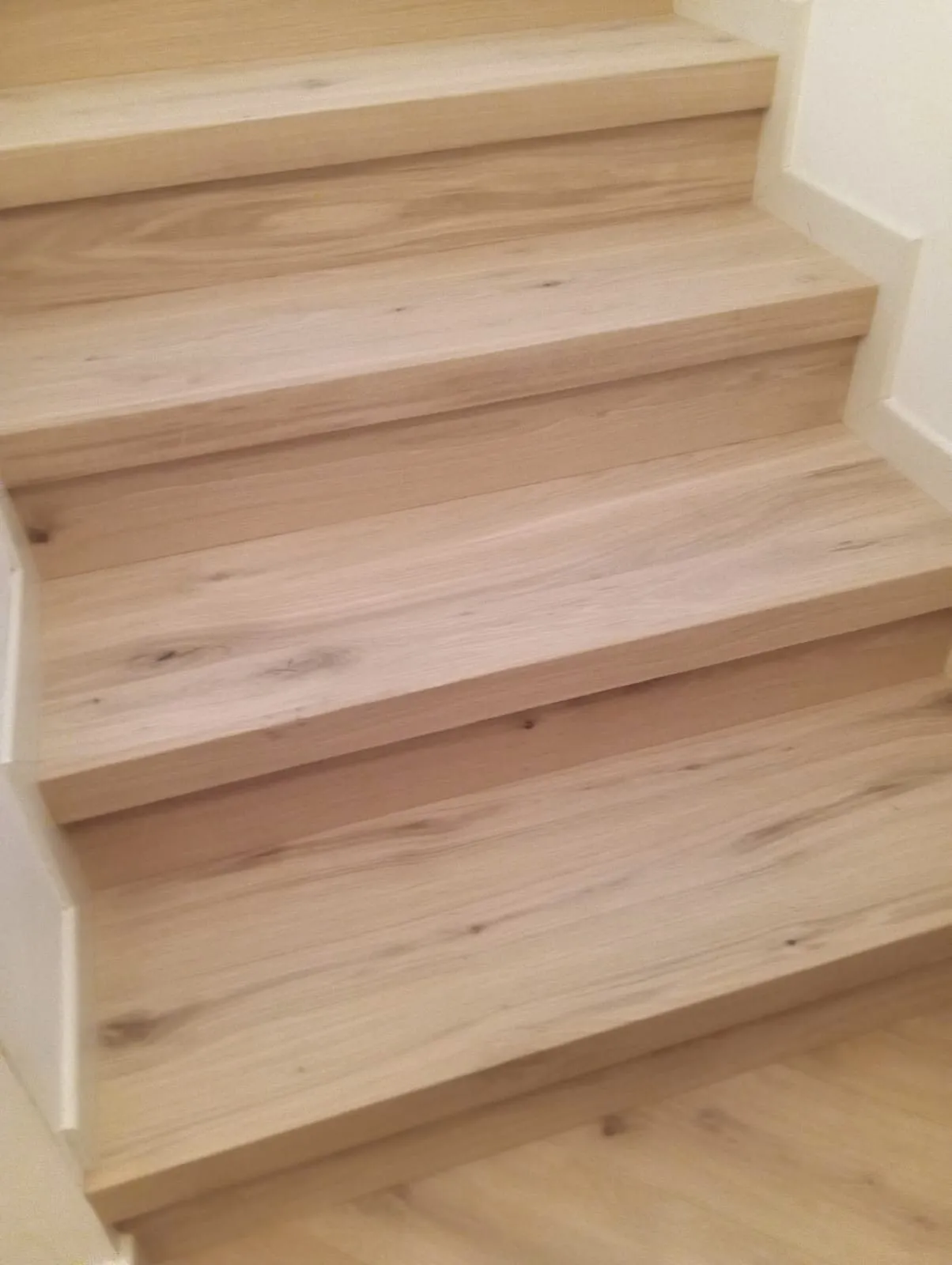
If the staircase itself is sound but the treads are worn, painted or carpeted, you don’t have to replace it to get solid oak steps. Over-treads are laid on the existing steps: the old structure stays, the oak goes on top. This guide explains how ours are made, what to check before ordering, how to measure, and the one dimension people forget: the height of the first and last step.
What our over-treads are
- Material
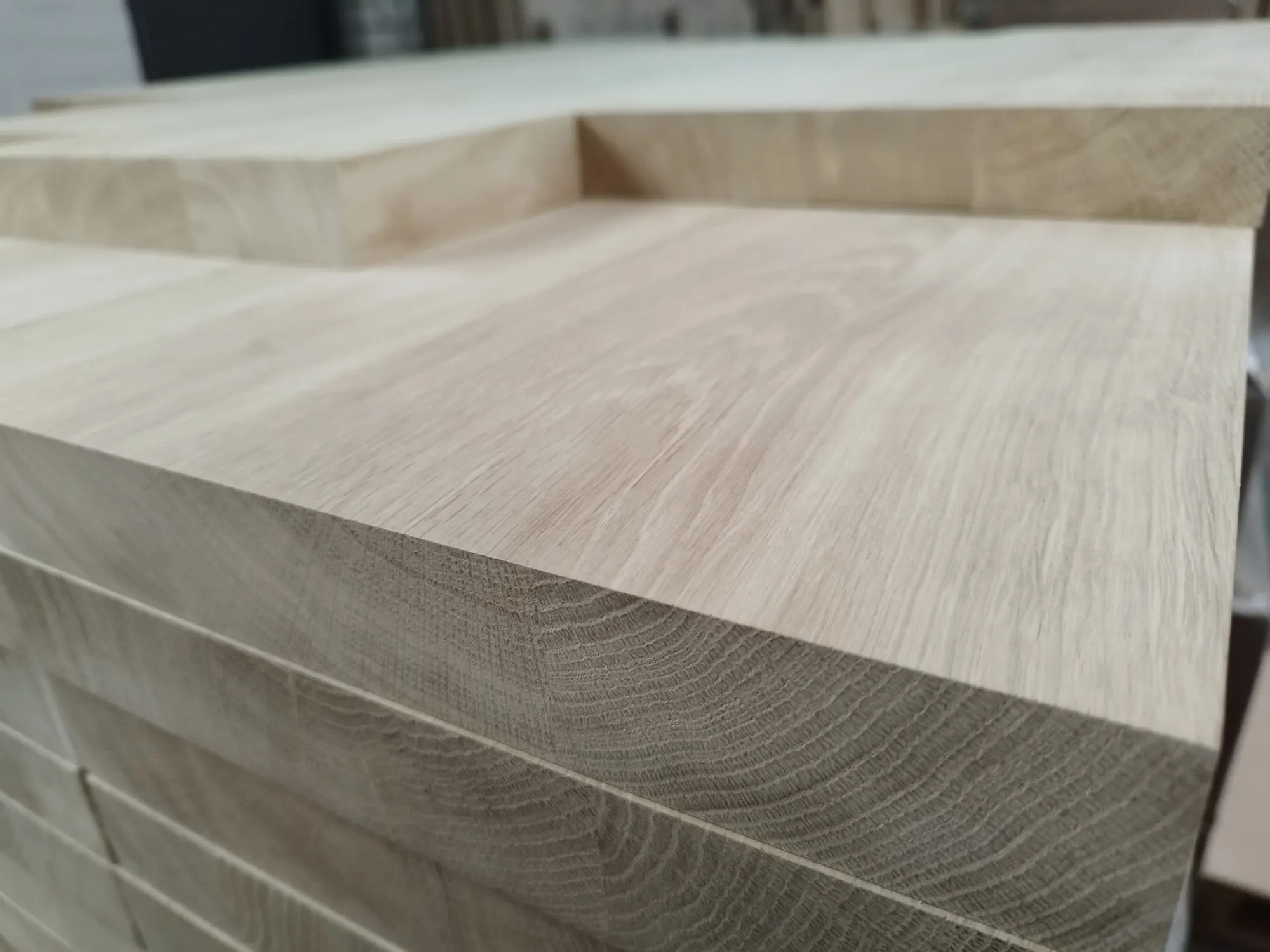
- 100% solid European oak, no veneer and no core of another material
- Thickness
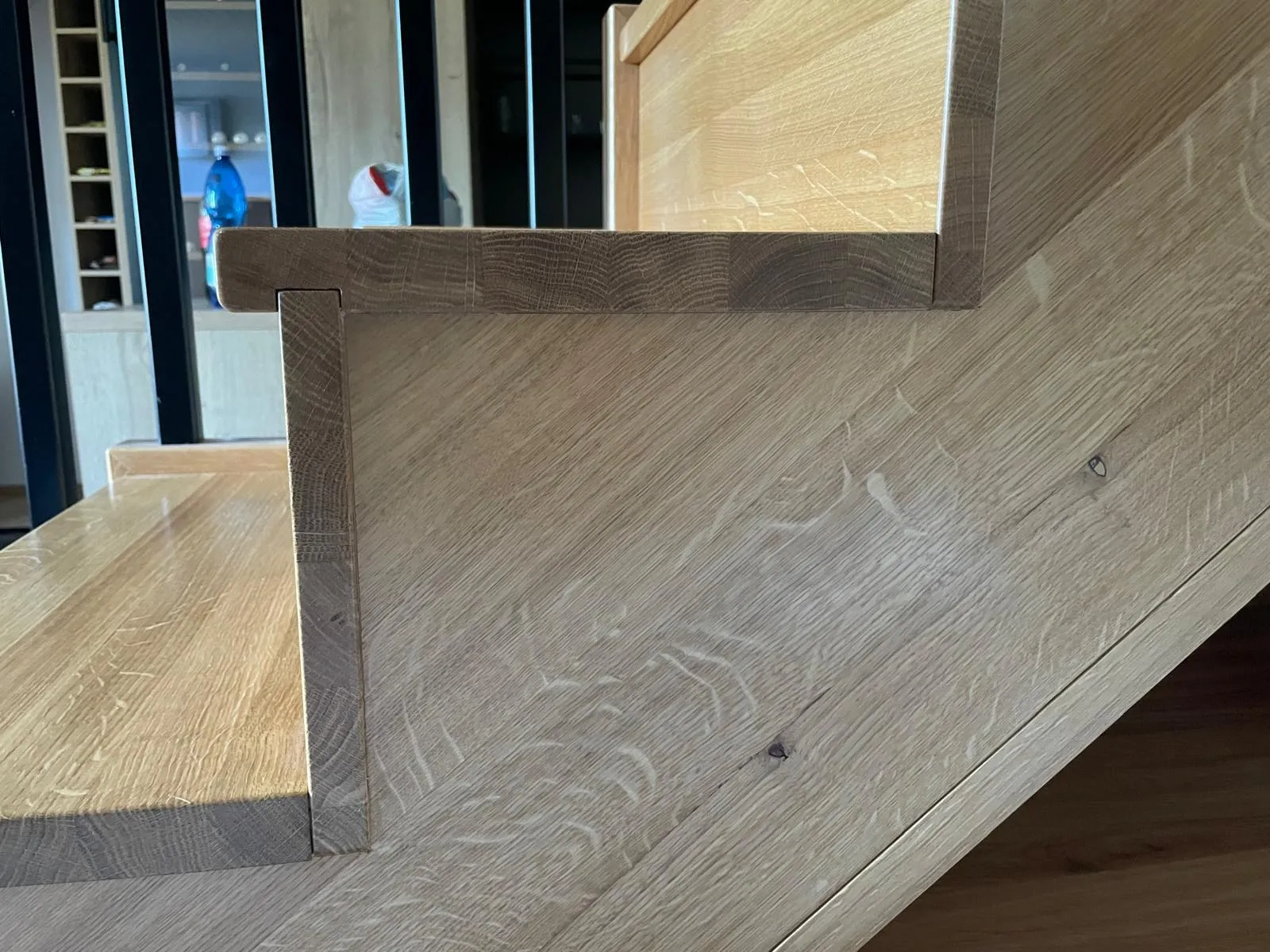
- 15 mm on the step, with a 40 mm nose over the front edge
- Standard sizes
- 5 sizes, 800–1000 mm long and 235–315 mm deep
- Grades
- A/B (cleaner, fewer knots) or B/C (more natural character)
- Surface
- Sanded and unfinished, ready for your oil or lacquer
Many stair cladding kits sold in the UK have a thin oak veneer on a board core. Ours are solid oak all the way through, so a cut end or a sanded edge is still oak. The difference is explained in Solid oak vs oak veneer stair treads.
Before you order
- The existing steps must be sound, flat and firmly fixed. Over-treads cover a step; they don’t repair one. If a step moves or creaks, have it fixed first.
- Remove carpet, gripper rods and anything that stands proud of the old tread, and check the old nosing: the 40 mm oak nose sits over it.
- Straight steps suit standard sizes. Winders and quarter landings are not rectangles: send a drawing or a template and we tell you what we can make.
- Decide how you will treat the risers and the landing before you start, so the whole staircase finishes at the same level.
Measuring each step
Number the steps from the bottom and measure every one: staircases vary by a few millimetres from step to step. For each step, measure the length where the over-tread will sit (wall to wall or wall to string, at the front and at the back) and the depth from the riser at the back to the front of the existing nosing. Send the list with a photo of the staircase. We match each step to a standard size, or price the cutting on request.
| Step | Length (mm) | Depth (mm) | Notes |
|---|---|---|---|
| 1 | 862 | 248 | Bottom step |
| 2 | 861 | 247 | |
| … | … | … | |
| 12 | 864 | 249 | Top step, meets the landing |
Steps longer than 1000 mm or deeper than 315 mm don’t fit a standard over-tread. Send those sizes and we tell you what we can make. For measuring in detail, see How to measure replacement stair treads.
The first and last step
Every over-tread raises its step by 15 mm. Between two clad steps nothing changes: both go up by the same amount. At the ends it does change. The first rise, from the floor to the first step, becomes 15 mm higher. The last rise, from the top step to the landing, becomes 15 mm lower, unless the landing is raised by the same amount (“Landing +15” below).
| Rise (mm) | Before | After | Landing +15 |
|---|---|---|---|
| Floor to step 1 | 200 | 215 | 215 |
| Between steps | 200 | 200 | 200 |
| Top step to landing | 200 | 185 | 200 |
Check before you fit
Risers and landings
With over-treads the existing risers stay in place; they are usually painted or clad separately. For the landing, send us its size and the height you need to make up, and we tell you what we can supply to bring the top step back to an even rise.
Fitting and finishing
- Finish every face and edge, including the underside, following the instructions of the oil or lacquer you choose.
- Give the top surface a third coat for long-term wear.
- Let the oak acclimatise in the room for a few days before fitting.
- Fix the over-treads following the instructions of the adhesive and fixings you use, and the advice of your fitter.
- We supply the oak. We don’t install or fit it.
Sizes and prices
Every standard over-tread size, per piece, ex VAT:
| Size (mm) | B/C | A/B |
|---|---|---|
| 800 × 235 × 15 | £29 | £37 |
| 900 × 235 × 15 | £32 | £42 |
| 900 × 255 × 15 | £34 | £44 |
| 1000 × 275 × 15 | £40 | £52 |
| 1000 × 315 × 15 | £47 | £61 |
We sell the standard sizes online. Need it cut to size? Send your measurements — we price the cutting with your order.
Questions
Do I need to remove the old treads?
No. Over-treads are laid on the existing steps, so the staircase stays in place. The old steps must be sound, flat and firmly fixed.
Are your over-treads solid oak or veneer?
Solid European oak: 15 mm on the step, with a 40 mm nose over the front edge. There is no veneer and no core of another material.
Can you cut over-treads to each step?
Yes, on request. Send the length and depth of every step and we price the cutting with your order.
Do you fit them?
No. We supply the oak; fitting is done by you or your fitter.
Renovating a staircase?
Send the length and depth of every step, a photo of the staircase and your postcode. We match each step and reply with one written price.